Showing posts with label Financial Literacy. Show all posts

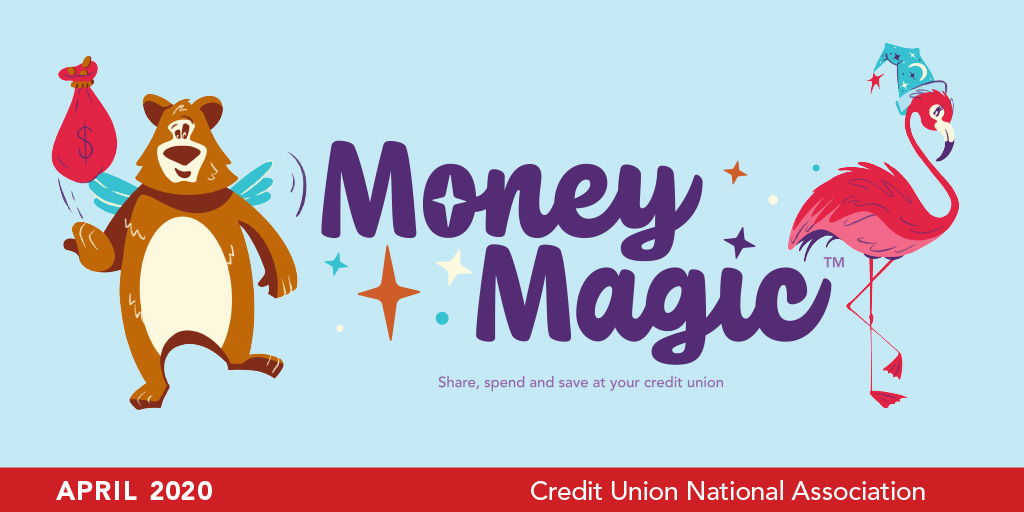
National Credit Union Youth Month 2020 focused on 'Money Magic'

on 8:28 AM

The official theme for this year’s National Credit Union Youth Month is “Money Magic! Share, Spend and Save at Your Credit Union.” This engaging and colorful theme makes saving exciting by showing young members the joy of setting aside money for everyday spending and helping others. Celebrate National Credit Union Youth Month this April to help promote lifelong healthy money habits.

YM2020“We’re showing kids that it’s important to save, and easier to do so when you have a goal in mind,” says Michelle Kamke, marketing projects manager at CUNA. “We’ve incorporated fun characters like a flamingo and unicorn into this year’s theme to make it easier to capture the attention of young members everywhere.”

Youth Month festivities serve as a launching pad to create lifelong relationships with young members by showing them the unique power of credit unions to help them achieve their goals.

Michael Murdoch, communications specialist at Wauna FCU says, “Credit Union Youth Month is more than just a time to recognize members, it’s a time to champion healthy financial habits, strengthen the integrity of your shop and showcase your devotion to the betterment of others.”

See how others have brought Youth Month to their credit union and find inspiration for your celebrations. 2020 Youth Month-themed promotional materials and merchandise are available now in the CUNA Member Celebrations Store.

When you celebrate Youth Month with us this April, share your story using the hashtag #CUYouthMonth to build awareness for your credit union and the credit union movement.

Start planning today at cuna.org/youthmonth.

Encourage Member Saving w/America Saves Week

on 4:19 PM

America Saves Week 2020  is a little over one month away.  AVCU was an inaugural partner in the initial Vermont version of the promotion.   America Saves is an initiative of the Consumer Federation of America (CFA), a non-profit, pro-consumer organization  of over 270 consumer education, advocacy, and cooperative members dedicated to advancing consumer interest.

Since 2007 America Saves Week has been an annual celebration as well as a call to action for everyday Americans to encourage individuals and families to take the America Saves pledge, a tool  that empowers them to commit to save successfully with a plan. Thousands of non-profit, government, and corporate organizations partner with America Saves through local, regional, statewide, and national campaigns both year-round and during America Saves Week.

(Click the graphic to watch the video)

Use the freely available America Saves Week digital toolkit on your credit union's social media channels. There's a different theme each day of the week:

Monday, February 24th | Save Automatically
Tuesday, February 25th | Save with a Plan
Wednesday, February 26th | Save for the Unexpected
Thursday, February 27th | Save to Retire
Friday, February 28th |  Save by Reducing Debt
Saturday, February 29th | Save as a Family

Your credit union can sign up as a no-commitment participant in America Saves Week. Doing so gets you the America Saves Week 2020 participation graphic for websites and in materials, get helpful emails from America Saves Week staff to help plan successful activities,  be listed as a participant, and access the social media materials to help educate your members.

Find all of the details at https://americasavesweek.org/

BankSafe Training Saves Consumer & FIs Nearly $1m

on 4:42 PM

The BankSafe training piloted by Vermont credit unions in 2018 saved consumers and financial institutions almost $1 million in preventing financial exploitation before the money leaves their account.

Vermont was among a handful of states where financial institutions were invited to pilot AARP's BankSafe training program for frontline staff.  The program aims to give bank and credit union employees the knowledge, skills and confidence they need to: better understand as well as empathize and interact with older consumers in an exploitation situation; recognize their responsibility to identify signs of financial exploitation; and take the right steps to protect assets. The program empowers financial institution employees with the ability to identify signs of exploitation of older Americans.

AARP collaborated with CUNA to officially launch the BankSafe program nationwide in May of 2019.

AARP just released a study conducted on the impact of training financial professionals to prevent financial exploitation. The study was conducted by the AARP Public Policy Institute in conjunction with the Virginia Tech Center for Gerontology and examined 1,816 individuals who have completed the entire BankSafe training. It showed:

  • BankSafe training saved consumers and financial institutions almost $1 million in preventing financial exploitation before the money leaves the account;
  • Participants saved 16 times more than those in the control group who did not take the BankSafe training;
  • The intervention group saved an average of $865 per trained participant versus $70 per participant in the control group;
  • The intervention group reported suspected cases of exploitation at a rate four times higher than the control group;
  • Increase in staff confidence was four times greater for the intervention group compared with the control group; and
  • The intervention group had a 133% increase in knowledge scores.
Read the full study results online.

Watch CUNA's BankSafe explanatory video below.

61% w/Credit Card Debt Willing to Go Deeper For Holidays

on 3:11 PM

The holidays bring out the best and worst in people, and always tend to make consumers go into debt.

In October, CreditCards.com commissioned YouGov Plc to conduct a survey of 2,600 adults, including 2,143 credit card holders. Fieldwork was undertaken Oct. 2-4, 2019. The survey was carried out online.

Results of the survey show that 61% of those who carry a card balance are willing to add to their deficit this holiday season, compared to 30% of cardholders who do not currently have credit card debt.  And more than half (52%) of millennials surveyed said they are willing to add to their debt, as opposed to 49% of Gen Xers and 34% of baby boomers.

Check out these other notable results from the holiday debt poll:
  • Those in debt are more willing to add to it. More than half of credit card debtors (51%) said they think the holidays are a valid reason to add to their debt, but only a small percentage of those with no debt agreed (26%);
  • Kids matter. When it comes to the holidays children are the stars—almost two-thirds of parents (65%) with kids under 18 said they would be fine with adding to their card debt during the season and more than half (56%) responded that they felt it was fine to do so;
  • Genders differ. Men with credit cards are more willing to take on holiday card debt than women (50% versus 41%);
  • The right reasons? Among cardholders who are willing to take on credit card debt this holiday season, almost half (46%) said it was to please a family member or friend and a large percentage (42%) said it was to make themselves happy. Thirty-eight percent said it was to please their children and another 38% said it was to make their partners happy; and
  • The big payoff. Those surveyed shared their plans to pay off that holiday debt: More than half (57%) said they would pay more than the minimum each month, some planned to cut expenses (38%), others (21%) said they were planning to get a balance transfer card, a few (18%) said they planned to get a side gig, such as freelancing, selling on Etsy, or driving for Uber, and even fewer (16%) reported they intended to sell unneeded possessions.

The fact that more than 60% of credit card debtors are willing to go into further debt is a testament to the natural social pressure to get gifts for those you genuinely care about. The fact that 52% of millennials don’t mind going further into debt points toward not having a fundamental understanding of the consequences.

Older consumers are somewhat less likely to make these financial mistakes because they have experienced the consequences.

Men are probably more willing to go into debt over holiday spending than women because they want to feel as though they have provided for their loved ones.

Foundation Issues $75K in Grants for Member & Employee Financial Health; Releases First Ever DE Impact Report

on 3:18 PM

The National Credit Union Foundation (the Foundation) Board of Directors recently approved 8 grants totaling $75,000 to help credit union organizations document and measure the impacts of their products and services on member and employee financial health.

In 2017, the Foundation funded six credit unions to measure the financial health of their members, using the Center for Financial Services Innovation financial health segmentation methodology. The aggregate data showed that more than half (58%) of members in the total credit union sample are struggling financially, highlighting a significant opportunity for credit unions to help their members better spend, save, borrow, and plan.

The purpose of these grants is to help credit unions build upon this work by supporting their initiatives to measure and document these efforts specifically in the Save, Spend, Borrow, and Plan categories.

Foundation Releases First Ever DE Impact Report

The Foundation also announced that it has released the first ever Impact Report for its Credit Union Development Educator (CUDE) program (click to download the PDF) which has been inspiring change through credit unions since 1982.

CUDE is the Foundation's signature program. It is a transformative and experiential training that promotes the education and application of credit union business principles and philosophy.


The mission of the DE Program is to help established and emerging leaders within the credit union movement understand and leverage credit unions’ unique business model to serve members and communities in new and better ways.

Mystery Shopper Scam Hits Maine

on 10:26 AM

According to CU Today, consumers in Maine are being warned not to fall for a “mystery shopper” scam that is again making the rounds.

Mainers have been receiving letters in the mail with checks for $2,000 and a request they deposit the check, buy $2,000 worth of gift cards and then text a number with gift card information.

"Criminals have gotten much more sophisticated in how they try to fraud, how they attempt to do fraud and they've kinda steered away from mail but this is making the rounds,” said Jen Burke of the Maine Credit Union League.  “But we've had nine instances where people have come into our credit unions asking to deposit these checks because of this mystery shopper scam.”

The scammers are using real companies in this scam, the league added.

VT Judge Issues Arrest Warrants for Delinquent Debtors

on 4:58 PM

As reported by Vermont Pubic Radio, a Caledonia County (VT) small claims court judge is in the news this week for issuing arrest warrants for people with unpaid debts.  Over the past 20 years, the court has issued roughly 290 such warrants, mostly after debtors missed hearings or failed to make payments.

The problem is . . . arresting people for unpaid debts in Vermont has been illegal for over 150 years.

The affected small claims debtors, with debts of $5,000 or less, were arrested and at times forced to pay creditors hundreds of dollars without due process or access to a lawyer.  The warrants were issued by retired Assistant Judge Roy Vance during his 22 years on the bench overseeing small claims.  Vance doesn't dispute that he violated state law and the Vermont Code of Judicial Conduct by issuing the arrest warrants and demanding payment from debtors without due process. He resigned in January upon suggestion by Chief Superior Judge Brian Grearson.  According to the Judicial Conduct Board, Vance expressed genuine remorse for any harm done and cooperated fully with the nvestigation.  Vance said he wouldn’t have issued the warrants if he had known it was wrong and blamed the blamed the court’s administration for his mistakes.

Click the embedded player below to hear the complete VPR broadcast of this story.

Equifax Reaches $700m Settlement

on 11:49 AM

Equifax, one of the biggest credit reporting agencies in the United States, has reached a $700 million settlement over its history-making massive security breach of 2017.  That's the largest data breach settlement amount in history.  Personal data of about 56% of American adults, or 145 million consumers, was exposed in the data breach . . . including names, addresses and social security numbers. Watch the NBC Today show video below for the details

Affected consumers will receive:
  • $25 for each hour spent safe-guarding their information
  • reimbursement for certain credit monitoring programs
  • 10 years of free credit monitoring
Watch the embedded video below for the whole story and advice to consumers.


Video: Intl. Development by the World Council of CUs

on 2:01 PM

TheWorldwide Foundation for Credit Unions has released a new video highlighting the international development projects, learning initiatives and disaster relief efforts World Council for Credit Unions (WOCCU) administers through the global credit union movement.

The video supports the Worldwide Foundation’s efforts to grow its base of Champions who support the vision of expanding financial inclusion to more than 1.7 billion people who remain outside the global financial system.

“We wanted people to be able to sit down for just a few minutes and learn about all of the great work we’re doing and find out how they can be a part of it,” said Mike Reuter, Executive Director for Worldwide Foundation for Credit Unions. “This video shows exactly how we put our motto—Do Global Good—into practice every day throughout the world.”

View the video below, or on the Worldwide Foundation’s website, where visitors can donate to various projects or subscribe to Field Notes: A Blog of the Worldwide Foundation. The website also  features a Global Good Toolkit—a range of business development tools credit unions and individuals can leverage to both achieve their strategic objectives and be part of growing the global credit union movement. Visitors also can find a link to World Councils’ new Digital Transformation Lab.

Watch the video below:

Overbiffing: Latest Unfair Debt Collection Scam

on 3:39 PM

MSN Money reports on overbiffing as the latest outrage in unfair debt collection practices. In a recent case, regulators allege a New York debt collector tricked thousands of consumers into paying far more than they actually owed by fraudulently inflating consumer balances and using profane, abusive and illegal tactics to collect the fabricated bills. The term is called "overbiffing" because the scammers overstate a person's "balance in full," which is sometimes shortened to BIF. 

Buffalo debt collector Robert Heidenreich's collectors documented how much they "overbiffed" by using forms showing the actual balance due as well as the inflated amount that they told consumers was owed. In many cases, the false balance was hundreds, even thousands, of dollars more than the consumer actually owed.

In addition to artificially inflating debt balances, Heidenreich directed employees to mislead debtors about who was calling — encouraging his debt collectors to pose as lawyers. The debt collectors would warn the consumer had committed a crime and was about to be arrested, sued or served with legal papers because of a failure to pay an alleged debt. When the frantic consumer would ask how to stop the legal proceedings, the debt collectors would direct them to "attorneys" — actually just additional debt collectors — who would allow them to pay over the phone with a debit card. When consumers balked at paying the bill, the debt collectors turned abusive, engaging in threatening expletive-filled rants, sometimes threatening to call the debtor's employer or relatives.

The Fair Debt Collection Practices Act prohibits all of these actions. Debt collectors are not allowed to use abusive language, or contact anyone other than the debtor in their attempt to collect. Misrepresenting who collectors are, lying about the consequences of not repaying a debt and fabricating debt amounts are also prohibited under FDCPA, as well as other fraud statutes. Anyone who is contacted by a debt collector has the right to demand that the collector "validate" the debt in writing, showing how much is owed and to whom.

Read the story in entirety on MSN Money.

New CU Answer for Farm Families in Malawi

on 11:59 AM

Credit unions often make a difference to their members here in the U.S., but in some parts of the world a credit union is even more integral to peoples' lives.

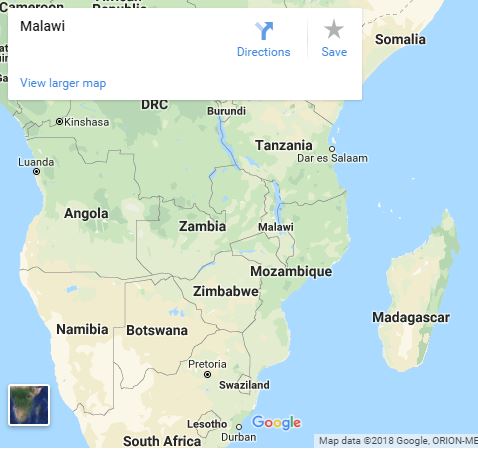
One of the newest credit unions in the world is serving sesame, legume and rice farmers in Malawi.  In development for 18 months and established in September, 2018. Its was created with support from  the U.S. Agency for International Development (USAID)'s USAID UBALE Project, which NCBA CLUSA is implementing in Malawi with Catholic Relief Services.

Blantyre, Nsanje and Chikwawa Savings and Credit Cooperative (BNC Sacco) already has over 2,000 initial members and is on track to have 4,000 by the end of the year.  A Sacco in Malawi is typically known as a credit union in the U.S.  Sixty percent of BNC Sacco's members are women.

The idea to create a credit union among the farmers came about as part of a USAID project to reduce chronic malnutrition and food insecurity in the area, part of which was to improve access to finance so farm families can weather unpredictable markets and non-harvest seasons.   Malawi farmers have difficulty accessing credit during lean seasons of the year. About 46% of adult Malawians don't have access to any type of financial services. BNC Sacco is working with mobile money wallet providers Telekom Networks Malawi (TNM) Mpamba and Airtel Money, to facilitate access to the sacco by its rural Malawi members.

BNC SACCO brings Malawi’s total SACCO’s to 35, serving a membership of more than 200,000 people across Malawi,

Read more detail in this article by NCBA-CLUSA


Fast Facts:  The Republic of Malawi is a landlocked country in southeast Africa, roughly the size of Florida. English is the official language among the 18 million people, 53% of whom live below the poverty line. Malawi is one of the world's least-developed countries. The economy is heavily agricultural and the population is largely rural. The Malawian government depends heavily on outside aid.

Highlight: Opportunities' Fatnassi on Board of Inclusiv

on 2:16 PM

A number of Vermont credit union leaders serve in one or more national capacities. One such leader is Cheryl Fatnassi, chief executive officer of Opportunities Credit Union. Cheryl is a member of the board of directors of the newly re-branded Inclusiv, formerly the National Federation of Community Development Credit Unions (NFCDCU). 
Cheryl Fatnassi, CEO
Opportunities Credit Union

Now CEO and President of Opportunities Credit Union since 2008, Cheryl was formerly chief operating officer of the credit union. She assumed the credit union's leadership role upon the retirement of Opportunities’ founder, Caryl Stewart. The credit union, headquartered in Winooski, Vermont, is approximately $40 million in assets and serves 6,500 members. 

Cheryl has working in financial services for over 38 years. In her role on the 17-member board of Inclusiv, she serves on the Executive Committee as Corresponding Secretary.  Cheryl is also a member of the organization's Technology Committee and chair of its Mortgage Advisory Committee.

Inclusiv is a certified community development financial institution (CDFI) intermediary that provides capital, makes connections, builds capacity, develops innovative products and services and advocates for its member community development credit unions (CDCUs). CDCUs belongilng to Inclusiv serve over 8 million residents of low-income urban, rural and reservation-based communities across the United States and hold over $80 billion in community-controlled assets. Founded as NFCDCU in 1974, Inclusiv is headquartered in New York city, with offices in Madison, WI and Atlanta, GA. 

8.4 Million Households Go UnBanked

on 12:46 PM

To assess the inclusiveness of the banking system the Federal Deposit Insurance Corporation conducted a June 2017 survey of 35,000 unbanked and underbanked households.

The survey provides estimates of the proportion of U.S. households that don't have an account at an insured institution and the proportion that have an account but obtained (non-bank) alternative financial services in the past 12 months. The survey provides insights to inform efforts to better meet the needs of these consumers within the banking sy
stem.

Estimates from the 2017 survey indicate that 6.5% of households in the United States were un-banked in 2017. This represents approximately 8.4m households. An additional 18.7% of households (24.2m) were under-banked . . . meaning that the household had a checking or savings account but also obtained financial products and services outside of the banking system.

The 2017 survey examines a number of additional topics, including the methods that banked households used to access accounts, bank branch visits, use of prepaid cards, use of alternative financial services, saving for unexpected expenses or emergencies, use of credit, and the methods that households used to conduct financial transactions in a typical month.

See http://www.economicinclusion.gov/ for survey findings, the ability to generate custom tables and charts using 2017 and earlier years of survey data, and data downloads and documentation.

The 2017 survey report, executive summary, and other related materials follow:

2017 Executive Summary - PDF
2017 Full Report - PDF
2017 Appendix Tables - PDF

Free: Awareness Campaign Webinars

on 11:57 AM

A series of free webinars CUNA is hosting about the Awareness initiative.  They will be held on October 22, November 14, and December 10, all at 3:00 eastern time for an hour.

The topic for the first webinar is understanding the voice of consumers.  It will be hosted by Douglas Kiker of CUNA and the guest is Graeme Trayner of Glover Park Group, who has handled all the research and focus groups on Awareness.

Register for the first free webinar online.

Visit https://awareness.creditunion/ (password: openyoureyes) to learn more about the national credit union awareness program.

Pieciak Elected Leader of Securities Association

on 2:15 PM

Michael S. Pieciak, Vermont DFR Commissioner
Just today, Vermont's Commissioner of Financial Regulation, Michael Pieciak, begins his one-year term as the 101st elected president of the North American Securities Administrators Association (NASAA).  NASAA is the oldest international organization devoted to investor protection and responsible capital formation.

The organization is holding its annual meeting in Anchorage, Alaska, where Pieciak delivered his first address to member as elected leaders.  “I am honored to lead our association into its second century of service to our members, to the securities industry, and, most importantly, to Main Street investors throughout North America,” said Pieciak in his inaugural address. “We’ve been on the beat protecting investors during times of boom and bust. From ticker tape to the blockchain, NASAA members have worked together to adapt and advance our mission of investor protection.”

During his address, Pieciak outlined the focus of his presidency, which will include initiatives to preserve state regulatory authority by modernizing the association’s operations, as well as initiatives related to millennial investors, cybersecurity, financial technology, cryptocurrency enforcement matters, multijurisdictional enforcement matters, and standards of care. He also said NASAA will launch a campaign next year to commemorate the 100th anniversary of its formation.

Pieciak served as NASAA’s president-elect over the past year, and has been chair of its board-level Fintech and Capital Formation committees as well as a non-voting member of the SEC Advisory Committee on Small and Emerging Companies.

Commissioner Pieciak was appointed by Governor Shumlin in July 2016 and re-appointed by Governor Phil Scott in December 2016 to serve as commissioner of Vermont’s Department of Financial Regulation. In that capacity, he's the chief regulator of Vermont’s financial services sector, including the insurance, captive insurance, banking and securities industries. Previously, he was the Department's deputy commissioner of Securities, where he led the investigation into the Jay Peak EB-5 projects.

This post adapted from Vermont Business Magazine.

Video: DFR Deputy Commissioner on Investment & Securities Fraud

on 2:02 PM

William Carrigan, Deputy Commissioner of the Vermont Department of Financial Regulation, was interviewed about investment and securities fraud insights recently by Elliott Greenblott of Greater Northshire Access Television (GNAT).

Bill was appointed Deputy Commissioner of the Securities Division in July 2016 and has been at DFR since 2007.  He's a Certified Fraud Examiner, and worked closely with the FBI and IRS to expose the $28 million ponzi scheme involving hundreds of investors.  He also was a member of the team investigating the Jay Peak EB-5 case resulting in federal and civil lawsuits. Carrigan also spearheaded the inquiry that led to the recent $5.9 million settlement with Raymond James and Associates.

GNAT cablecasts public, education and government programming to 7000 homes in 11 towns in Southwest Vermont.

Watch Bill's interview below:

Credit Freezes Soon Free at Major Reporting Agencies

on 10:32 AM

Starting September 21, 2018, all 3 major consumer credit bureaus will be required to offer free credit freezes to all Americans and their dependents. A credit freeze — also known as a “security freeze” — restricts access to a consumer's credit file, making it far more difficult for identity thieves to open new accounts in that person's name.

Many states allow the big three bureaus — Equifax, Experian and TransUnion — to charge a fee for placing or lifting a security freeze. But thanks to a federal law enacted earlier this year by Congress it will be free to freeze and unfreeze credit files throughout the United States.

There are dozens of private companies that specialize in providing consumer credit reports and scores to specific industries, including real estate brokers, landlords, insurers, debt buyers, employers, banks, casinos and retail stores. A handy PDF produced earlier this year by the Consumer Financial Protection Bureau (CFPB) lists all of the known entities that maintain, sell or share credit data on U.S. citizens.  The CFPB document links to websites for 46 different consumer credit reporting entities.  Via numerous front-end Web sites, each of these mini credit bureaus serve thousands or tens of thousands of people who work in the above mentioned industries and who have the ability to pull credit and other personal data on Americans. In many cases, online access to look up data through these companies is secured by nothing more than a username and password that can be stolen or phished by cybercrooks and abused to pull privileged information on consumers.  Access to some of these credit lookup services is supposed to be secured behind a login page, but often isn’t.

Read the full original article at Krebs on Security.

"Stop the Data Breaches" MAP Campaign Launched

on 12:20 PM

Earlier this week CUNA launched its latest Member Activation Program (MAP) campaign, “Stop the Data Breaches,” focused on educating and activating members to call on members of Congress to enact data breach legislation.

A free, members-only Stop the Data Breaches webinar will be held on Tuesday, July 31 at 3 p.m. (ET).

MAP is a program designed for credit unions to get members engaged in credit union advocacy. Participating credit unions receive customizable content geared around a particular campaign.  The credit union delivers it to members, and members discover ways to play a role in the future of their credit union.

Credit unions that sign up for the MAP data breaches campaign have access to sample long- and short-form email templates for use in communicating with members. The templates can be customized to match credit unions’ existing marketing materials and format.

Members will be directed to the consumer-facing Stop the Data Breaches website, which provides resources about data breaches, information on how to protect members, the latest data breach news and a way to write an e-mail and/or tweet to members of Congress.

Credit unions can also use CUNA’s newly launched MAP community to ask questions, get feedback and share results and resources with credit unions around the country.

Free Facebook Live Event: Avoiding Military Scams

on 11:59 AM

NCUA and the Federal Trade Commission are hosting a Facebook Live event July 17 at 2 p.m. that will explain how military consumers can protect themselves from common scams.  Members of the military, veterans, and their families lost more than $25 million last year to imposter scams, and this event is part of the NCUA’s activities during Military Consumer Month, which runs through the month of July. No registration is required, and there is no charge. See details and link to the live broadcast via the Vermont Credit Unions Facebook page, linked below.

NCUA Community Development Grant Round Opens 7/1

on 11:32 AM

Low-income credit unions interested in applying for Community Development Revolving Loan Fund grants can begin submitting applications July 1.

The NCUA will administer approximately $2 million in CDRLF grants to the most qualified applicants, subject to the availability of funds. Credit unions may apply for a grant in one of three categories:
  • Digital Services and Security (maximum grant $10,000): Helping credit unions create digital relationships with members.
  • Leadership Development (maximum grant $10,000): Promoting career development within the credit union industry.
  • Underserved Outreach (maximum grant $20,000): Assisting credit unions in improving the financial well-being of individuals in underserved areas.
Applications for funding must be received no later than Aug. 18 at 11:59 p.m. Eastern time.

Grant requirements, application instructions, and other information are available in the 2018 Grant Round Application Guideline.

Federal law requires that credit unions have an active registration with the federal government’s System for Award Management prior to applying for funding. Credit unions interested in applying for CDRLF grants are encouraged to register in SAM.gov or recertify existing SAM.gov accounts as soon as possible. SAM.gov is an official U.S. government website that collects, validates, stores, and disseminates business information about the federal government's trading partners in support of contract awards, grants, and electronic payment processes.

The U.S. General Services Administration is implementing new processes to verify the identity of both new and existing registered entities. This may affect how long it takes the GSA to activate or recertify SAM.gov accounts. Credit unions registering a new account in SAM.gov or recertifying an existing SAM.gov account must now submit a notarized letter to SAM.gov stating that they are the authorized Entity Administrator within 30 days of account activation.